
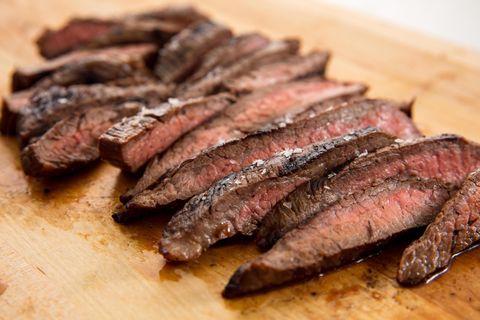
You only need to follow three steps to come up with the best steak with a juicy center, a crispy crust, and has no fuss. Partnered with other few tips, the three-step method will result in a perfectly cooked steak with a sweet buttery flavor. Below is a detailed description of these three methods.
Go for the best steak for pan-searing
The best steaks to cook on the stovetops are usually boneless with a thickness of between one and one-and-a-half inches. Thicker cuts such as the New York strip steak or the boneless rib-eye are very suitable for this method. Ensure the steak you purchase has plentiful marbling and be bold enough to request for a thicker steak from your butcher. Steaks with enough fat usually remain juicy throughout the cooking process and have the rightful texture and flavor that you would desire for your steak.
It is important to note that the overall cooking process happens much faster, and so you must be ready with a thermometer to start testing for doneness after two minutes.
For bonny steaks, it is better to use an oven or cook them on the grill since they are difficult to cook properly on a pan.
Season it well
Salting steaks, and the ability of salt to season the meat functions like a curve. On one end of the spectrum, seasoning the steaks before searing leads to nicely seasoned steaks. On the flip side, steaks that have been seasoned one day prior also result into well-seasoned steaks. Any other time in between makes the salt to pull out the surface moisture hence inhibiting a great sear.
- Salt steak for 30 minutes: This method works best when cooking steaks on a whim. Salting some few minutes before cooking usually season the steaks and helps to create a dry searing surface.
- Salt steaks for 24 hours: salting your steak between 18 and 24 hours before cooking creates a dry surface for searing. Besides this, the flavor becomes more concentrated in the inner tissue. A lot of fridge space is required for this maneuver since you will have to air-dry the salted steak on a cooling rack that has been set over a tray.
Spice after searing protein
When seasoning steak, steer clear of ground pepper, or other rubs for the pan-seared steaks. These spices will get burnt by the hot pan before they flavor the steak.

Cook it hot and fast
At this point, you need to have the heaviest pan possible preferably cast iron. Put the pan over high heat and allow it to become hot until it smokes then add the steaks to the pan. This high temperature helps in creating a nice crust on the steak. Searing does not involve keeping moisture in as some theories claim, but it involves making a crisp crust on the outside of the steak. Doing so increases the flavor resulting into a classic steak.
Ensure your steaks are continuously in motion by flipping or turning them every minute in order to create a thin and even crust on the outside. When cooking is halfway or thereabout, add a few tablespoons of butter, aromatics, and herbs to create a hot baste that is critical for finishing the steak. Using a large spoon, bathe the steaks in the hot butter as you continue turning it until you achieve the doneness of your choice.
Skip the oil
You must have realized that this method does not mention oil anywhere. This is because oil causes sticking and can inhibit browning, thus slowing searing.
Determining doneness
The best and most straightforward way to check for doneness is to use a probe thermometer. Since the factors at play are so many (the steak, the oven, the pan), the surest way to confirm doneness is to take the temperature. Start checking the temperature using a probe thermometer when cooking is about halfway through.
The bottom line
The three methods mentioned above are simple to follow, and they lead to a perfect steak. With only four ingredients and giving yourself about 15 minutes of cooking, you will be sure to enjoy your steak within a span of 45 minutes.